What Is IT Asset Discovery — and Why Does It Matter for
Enterprise Infrastructure?
Asset management is a foundational step that ensures organizations have a comprehensive understanding of their IT assets. Effective IT asset discovery provides the visibility needed to support efficient operations, optimize performance, and enable informed decision-making across enterprise infrastructure.
The numbers tell the real story: 64% of organizations lack foundational visibility and inventory of their hardware, software, virtual, and cloud assets. That's not a minor gap — it's a structural blind spot that affects monitoring, security, cost control, and infrastructure planning.
Many organizations rely on a variety of tools that serve legitimate, specialized needs, but these tools also create data and process silos. These silos make it nearly impossible to achieve enterprise-wide visibility and control over infrastructure assets without resource-intensive manual processes.
Without a structured IT asset discovery process, organizations struggle to maintain accurate asset inventory management — and that makes every other infrastructure decision harder than it needs to be.
What Is IT Asset Discovery?
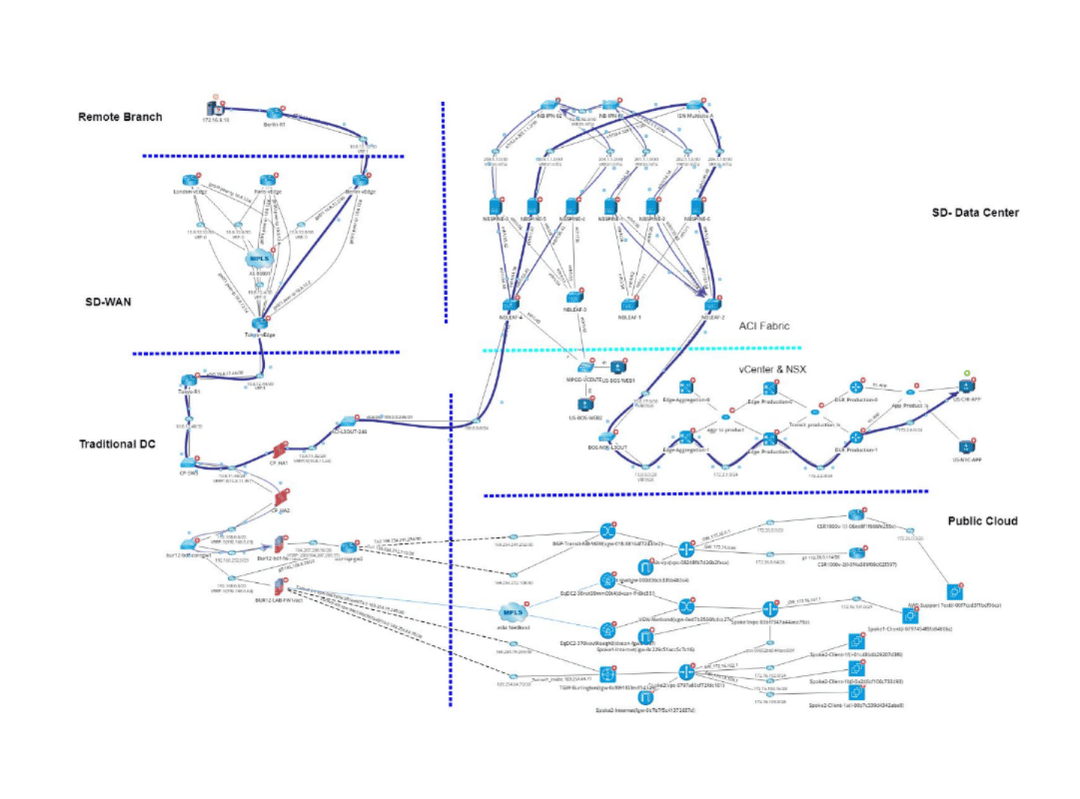
IT asset discovery is the process of identifying, cataloging, and maintaining an accurate inventory of all technology assets across an organization's infrastructure — including hardware, software, applications, virtual machines, and cloud resources.
It is the starting point for effective IT asset management. Without accurate visibility into what you have, where it lives, and how it connects, organizations cannot properly monitor performance, manage risk, control costs, or plan for future growth.
As environments expand across on-premise data centers, cloud platforms, and hybrid infrastructure, maintaining a reliable and up-to-date asset inventory becomes increasingly complex. A strong asset discovery strategy also plays a critical role in broader enterprise infrastructure strategy — including data center planning, migrations, and modernization projects.
Why Do Organizations Struggle with IT Asset Visibility?
Most organizations begin their asset management journey with discovery, but quickly run into challenges that limit effectiveness.
Organizations often rely on multiple tools, each designed for a specific function. While these tools provide value individually, they often create fragmented data, inconsistent processes, and limited enterprise-wide visibility.
This results in:
Incomplete or inconsistent asset inventories
Manual processes to reconcile data across systems
Limited visibility into infrastructure dependencies
Difficulty maintaining accurate and current asset records
To overcome these challenges, organizations must adopt a more structured and integrated approach to IT asset discovery.
What Are the Two Primary IT Asset Discovery Methods?
There are two primary IT asset discovery techniques: auto-discovery and physical audit discovery. While many organizations aim to rely solely on automation, the most effective asset discovery process combines both approaches to achieve complete infrastructure visibility.
Auto-Discovery: Automating IT Asset Visibility
Automation is a cornerstone of modern IT operations, and auto-discovery is one of the easiest ways to introduce it into your environment. In a world of BYOD and remote work, automated asset discovery tools help organizations quickly identify devices, applications, and services across their infrastructure.
Advantages of auto-discovery tools:
- Efficiency: Automated tools can rapidly scan networks and identify assets without manual intervention.
- Real-Time Updates: Continuous scanning ensures that the asset inventory reflects changes in dynamic environments.
- Accuracy: Automation reduces the risk of human error and improves consistency in asset tracking.
Challenges to be aware of:
- Incomplete or Excessive Data: Auto-discovery tools may miss certain assets due to network segmentation, firewalls, or low discoverability. At the same time, scanning entire environments can generate large volumes of unstructured data that are difficult to interpret.
- False Positives and Negatives: Automated processes can incorrectly identify assets or fail to detect existing ones.
- Lack of Context: Auto-discovery cannot fully capture physical infrastructure, such as data center hardware and cabling.
- Legacy Technology Limitations: Many tools still rely on SNMP, which requires ongoing maintenance and security considerations. Agent-based models introduce additional complexity that many organizations want to avoid.
These limitations are exactly why auto-discovery alone is rarely sufficient as a complete asset discovery process.
Physical Asset Discovery: Validating the Infrastructure
Physical audits play a critical role in validating and enhancing the accuracy of your IT asset discovery process. Let's be honest — no one enjoys tracing cables or manually validating every asset in an environment. But the accuracy this process provides is critical and cannot be replicated by software alone.
Advantages of Physical Audits:
- Verification and Accuracy: Physical audits confirm the existence and condition of assets, ensuring that digital records match reality.
- Security Assurance: Identifying physical assets helps uncover potential security risks and ensures that infrastructure is properly accounted for.
- Lifecycle Management: Understanding the physical state of assets supports better planning for upgrades, replacements, and long-term asset lifecycle management.
Challenges of Physical Audits:
Time and Effort: Physical audits require manual asset validation, which can be time-consuming and resource-intensive.
Let’s be honest — no one enjoys tracing cables or manually validating every asset in an environment. But the accuracy gained from this process is critical.
What Is the Best Approach to IT Asset Discovery —
Automation or Physical Audits?
Both. The real strength of any asset discovery process lies in combining automated tools with physical validation.
A combined approach delivers:
- Enhanced Accuracy: Auto-discovery establishes the digital baseline, while physical audits validate and refine the data.
- Comprehensive Visibility: Organizations gain a complete view of both digital and physical infrastructure assets.
- Risk Mitigation: Cross-verifying data reduces discrepancies, improves accuracy, and strengthens overall infrastructure security.
By integrating both techniques, organizations can eliminate blind spots and build a reliable asset inventory.
How Does IT Asset Discovery Support Broader Infrastructure Strategy?
Asset discovery isn't just an IT housekeeping task — it's the foundation on which every other infrastructure initiative depends.
You can't consolidate what you can't see. You can't monitor what isn't documented. You can't migrate infrastructure you haven't mapped.
A mature asset discovery process directly enables:
- Proactive IT monitoring — You need an accurate asset inventory before you can define what to monitor and why
- Data center consolidation and migration — Asset visibility is the first phase of any successful migration or consolidation project
- Infrastructure cost optimization — Identifying zombie assets, unused licenses, and redundant hardware starts with knowing what you have
- Security and compliance — You cannot protect or audit assets that aren't in your inventory
This is why asset discovery sits at the center of Vsol's Balanced Ecosystem framework — it's not a one-time project, it's an ongoing capability.
Building a Strong Foundation for IT Asset Management
Mastering IT asset discovery is critical for establishing accurate visibility and enabling effective infrastructure management across the organization.
By combining automated asset discovery tools with physical validation, organizations can improve decision-making, reduce operational risk, strengthen security, and build a foundation for proactive monitoring and long-term infrastructure strategy.
The asset discovery process isn't glamorous — but it's the work that makes everything else possible.
If your organization is struggling with asset visibility or managing complex infrastructure environments, Vsol is ready to help.