The Infrastructure Behind Everything: A Guide to Data Center Types and Why They Matter
Every app you open. Every file you share. Every AI-generated answer, every transaction processed, every video call your team takes. It all runs on physical infrastructure somewhere — and that somewhere is a data center.
Most business leaders will never set foot inside one. But the decisions about where data centers get built, how they operate, and who runs them have a direct impact on your organization's infrastructure costs, application performance, connectivity reliability, and long-term resilience.
Whether you're evaluating a cloud migration, weighing colocation against on-premises, or trying to understand what your infrastructure partners are actually recommending — this is worth your time.
What Is a Data Center, and Why Does It Matter for Your Business?
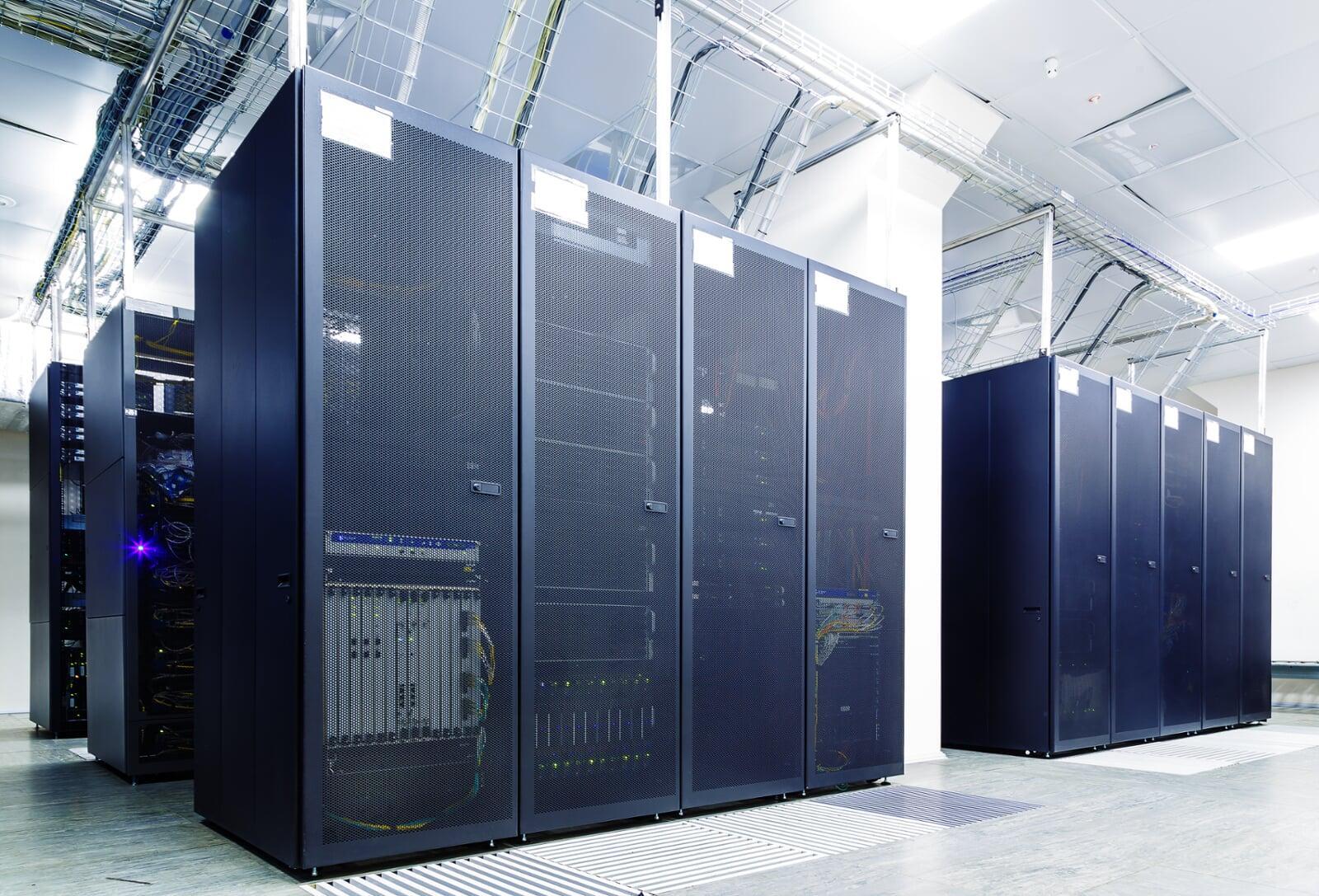
A data center is a purpose-built facility that houses and operates computer systems — servers, storage, networking equipment — along with the power, cooling, and security infrastructure required to keep everything running around the clock.
That definition covers a wide range of environments. A server room in a regional hospital and a 100-acre cloud campus in Northern Virginia are both technically data centers. The term is broad, which is exactly why understanding the different types matters when you're making infrastructure decisions.
To appreciate the scale: U.S. data centers consumed 176 terawatt-hours of electricity in 2023 — roughly 4.4% of all U.S. electricity. By 2028, that figure is projected to reach 325–580 TWh. This isn't a niche technical footnote. It's a sector that is actively reshaping energy infrastructure, real estate investment, and the competitive landscape for enterprise technology.
What Are the Different Types of Data Centers?
Understanding the landscape helps you ask better questions of your technology partners — and make smarter decisions about where your infrastructure should actually live.
1. Hyperscale Data Centers
The big ones. Built and operated by Amazon (AWS), Microsoft (Azure), Google, and Meta, hyperscale campuses are massive, purpose-built facilities designed to run cloud services at a scale that's difficult to visualize. When someone refers to "the cloud," this is what it physically looks like.
Over 1,100 hyperscale data centers operate globally, with the U.S. holding approximately 54% of the world's hyperscale capacity. Amazon, Microsoft, and Google control 59% of that between them.
For enterprise organizations, hyperscale infrastructure is the foundation of most public cloud services. Access to this infrastructure is as much a connectivity decision as a vendor decision — how your workloads reach these facilities matters as much as which platform you choose.
2. Large-Scale Colocation
The shared ownership model. Companies like Equinix, Digital Realty, QTS, and STACK Infrastructure build and operate large, multi-tenant data centers. Organizations lease space, power, and connectivity inside a facility that the operator manages — without carrying the capital cost of building and maintaining the infrastructure themselves.
Think of it as a premium commercial building for your servers. Tenants get enterprise-grade power, cooling, physical security, and robust connectivity options. For mid-to-large enterprises seeking to reduce CapEx exposure while maintaining performance and control, colocation is one of the most strategically sound options.
3. Regional and Mid-Market Colocation
Same concept, regional scale. Local and regional colocation providers serve organizations that don't need — or can't justify — space in a tier-1 facility. Healthcare systems, financial services firms, local government agencies, and mid-market enterprises often find regional colo providers offer the right balance of performance, proximity, and cost.
For organizations operating in specific metro markets, regional colocation can significantly reduce application latency and enhance data sovereignty compared to routing everything through a distant hyperscale region.
4. Enterprise Data Centers (Owned and Operated)
Some organizations — large banks, hospital systems, manufacturers, government agencies — build and operate their own facilities for workloads that demand direct physical control. Patient health records, classified systems, and financial trading platforms often require regulatory compliance and performance standards that on-premises ownership satisfies most directly.
The trade-off is real: significant capital expenditure, ongoing operational responsibility, and the challenge of staffing and maintaining expertise in-house. For organizations making this evaluation, the CapEx vs. OPEX analysis is rarely straightforward — and the long-term total cost of ownership often surprises leadership teams.
5. Communications Provider Data Centers
Operated by AT&T, Verizon, Lumen, Comcast, and similar carriers, these facilities run the systems that deliver connectivity to their customers. Every call routed, every internet session maintained, flows through infrastructure housed here.
These facilities underpin the connectivity on which everything else depends — including your WAN links, internet circuits, and cloud on-ramps. When evaluating network and site architecture, understanding where your carrier infrastructure terminates is a meaningful part of the picture.
6. Branch and Distributed Infrastructure
A hospital system with 30 clinics, a retail chain with 200 locations, a regional enterprise with offices across multiple states — they all have some version of a distributed infrastructure footprint. A rack or two of equipment in each location, handling local access, security systems, or point-of-sale operations.
Collectively, these represent a significant share of total installed infrastructure — and one of the more complex environments to manage, document, and rationalize. Many organizations are gradually migrating portions of this footprint to cloud or regional colocation, but the transition requires careful planning and visibility into what's actually running where.
7. Edge Data Centers
Small-footprint facilities positioned close to where data is generated and consumed. Autonomous vehicles, real-time manufacturing controls, content delivery, 5G networks, and IoT deployments all require computing power that a centralized facility can't always serve with acceptable latency.
For enterprise organizations with distributed operations, edge infrastructure represents a different kind of decision — not one large facility, but a distributed pattern of smaller deployments that bring compute closer to the work.
How Does Data Center Infrastructure Affect Application Performance?
This is the question that often gets lost in infrastructure conversations that focus too heavily on cost or vendor brand. The physical distance between your users, your applications, and your data introduces real latency. Latency affects user experience, transaction speed, and system reliability in ways that compound across an organization.
The type of data center your workloads run in — and how well your network connectivity is designed to reach it — directly influences how your applications perform. Colocation with direct cloud on-ramps, for example, can dramatically improve performance for organizations running hybrid workloads compared to routing traffic across the public internet to a distant cloud region.
What's the Environmental Reality of Data Center Infrastructure?
These questions come up at every boardroom and every zoning hearing. They deserve straight answers.
On energy:
Data center efficiency has improved dramatically. The best facilities today operate at a Power Usage Effectiveness (PUE) of 1.04–1.10 — meaning only 4–10% of energy goes to overhead like cooling and power distribution. Compare that to an industry average of 2.5 in 2007. That's a meaningful shift. In 2024, data center operators signed over 17 GW of clean energy purchase agreements globally.
On water:
Historically, many facilities used evaporative cooling. That's changing fast. Microsoft announced in late 2024 that all new data center designs will use closed-loop, zero-water cooling. Immersion cooling — where servers are submerged in non-conductive fluid — eliminates water use entirely while cutting cooling energy by over 90%.
On the grid:
Data centers are increasingly functioning as grid assets, not just loads. The EPRI DCFlex initiative demonstrated in 2025 that data centers can reduce power consumption by 25% during peak demand through software-based workload shifting. If adopted broadly, EPRI estimates this could unlock 100 GW of usable capacity on the existing grid.
Why Is Data Center Infrastructure a Strategic Business Decision — Not Just an IT Decision?
NVIDIA CEO Jensen Huang called it plainly at the World Economic Forum in January 2026: "This is the largest infrastructure buildout in human history." Not software. Not services. Physical infrastructure — data centers, power, fiber, cooling systems.
Between 2017 and 2023, U.S. data centers contributed $3.46 trillion to GDP and supported 4.7 million jobs annually. The economic and operational stakes are significant — and they land squarely on the desks of CFOs, CIOs, and COOs evaluating infrastructure decisions.
For organizations still running legacy on-premises infrastructure, or managing a fragmented mix of cloud, colocation, and distributed assets without a clear strategy, the question isn't whether to engage with this landscape. It's whether you have the visibility and strategic framework to engage with it well.
What Should Enterprises Consider When Choosing the Right Data Center Model?
There's no universal answer — which is exactly why infrastructure decisions benefit from a strategy-first approach rather than a vendor-first one. The right model depends on workload characteristics, compliance requirements, connectivity needs, geographic footprint, and total cost of ownership over a meaningful time horizon.
Key questions worth asking:
- What does your current infrastructure footprint actually look like — and do you have accurate documentation of it?
- Are your workloads placed where they perform best, or where history put them?
- What is your actual connectivity architecture between locations, carriers, and cloud environments?
- Where does your infrastructure create concentration risk — single vendors, aging hardware, undocumented environments?
- What would a disruption to any single facility or carrier relationship cost you?
These aren't theoretical questions. They're the starting point for building an infrastructure strategy that's aligned with where your business is going — not just where it's been.
The Bottom Line
Data centers aren't mysterious buildings full of blinking lights. They're the physical foundation of every digital service your organization runs — and the decisions you make about them have real financial, operational, and competitive consequences.
The landscape is more diverse than most leaders realize, from hyperscale cloud platforms and large colocation facilities to regional providers, enterprise-owned environments, and distributed edge infrastructure. Each model has a role. The question is whether yours are aligned by design or by default.
Understanding how your infrastructure is structured — and how it connects — is the first step toward making better decisions about it.
If you're ready to take a closer look at your infrastructure footprint, Vsol is here to help you build a strategy that's aligned with where your business is going.